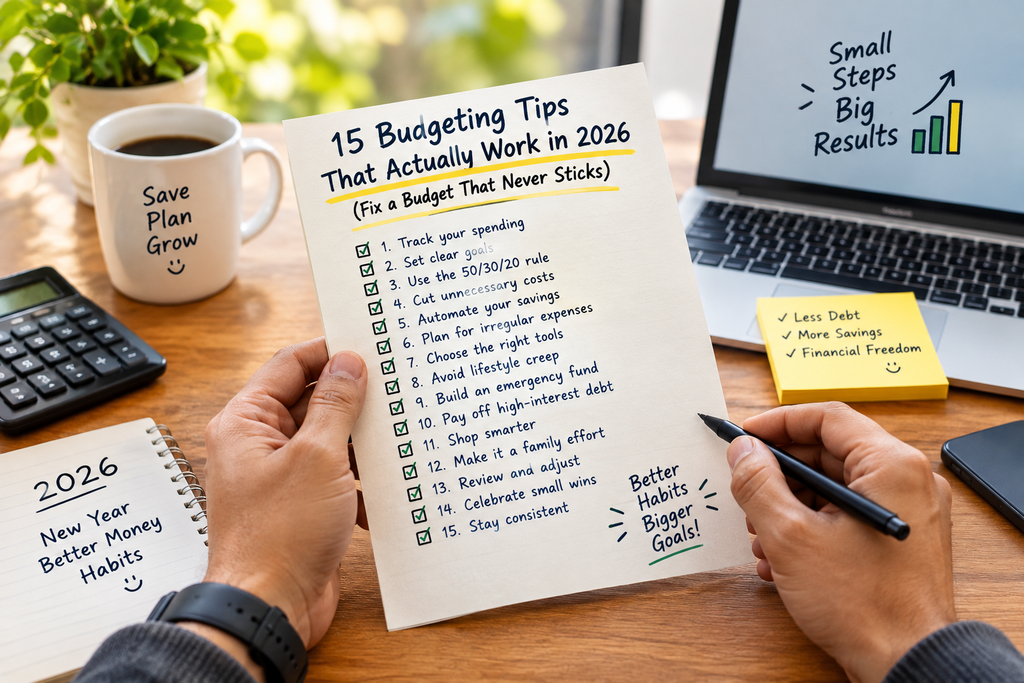
If you’ve tried budgeting before and given up by week two, these 15 budgeting tips will help you build a plan that actually sticks. You’re not bad with money. Most budgets fail because they’re built for who you wish you were (someone who never orders takeout) instead of who you really are. Below is a realistic, step-by-step approach to budgeting tips 2026 that holds up against real life.
Key Takeaways
- Track your real spending for 30 days before you set any limits.
- Pick one method (50/30/20, zero-based, or pay-yourself-first) and automate it.
- Plan for irregular costs with a sinking fund, and keep some no-guilt spending money.
- Review your budget weekly and adjust it every 90 days.
Why These 15 Budgeting Tips Work (And Why Most Budgets Fail)
A budget that only works in a perfect month isn’t a budget. It’s a wish list. The goal isn’t to restrict every dollar. It’s to know where your money is going and direct it on purpose. The 15 budgeting tips below fix the three most common problems: no real data, no flexibility, and no automation. Once you see your real numbers, small leaks become obvious, and that’s where most of your extra savings will come from.
1. Track Every Dollar for 30 Days First
Before you build a budget, find out what you’re actually spending. Pull your last month of bank and card statements and sort every transaction into categories. Most people are surprised by at least one category, usually food delivery or subscriptions.
2. Separate Needs, Wants, and Debt Payments
Split your spending into three buckets: essential needs (rent, utilities, groceries), flexible wants (dining out, entertainment), and debt payments. This single step shows you exactly where you have room to cut
3. Choose a Budgeting Method That Fits Your Personality
- 50/30/20 rule: 50% needs, 30% wants, 20% savings and debt. Great for beginners who want simple guardrails.
- Zero-based budgeting: Every dollar gets a job. Ideal if you want full control.
- Pay-yourself-first: Automate savings before anything else. Best if you tend to overspend.
There’s no single correct method. The one you’ll actually stick with is the right one, so start with just one of these 15 budgeting tips and add more later.
4. Use a Budgeting App to Remove the Manual Work
A spending tracker takes five minutes to set up and removes the friction that kills most manual budgets. Look for one that categorizes transactions automatically and alerts you when you’re close to a limit.
5. Set Three Goals: Short, Medium, and Long-Term
A short-term goal (build a $500 buffer), a medium-term goal (a 3-month emergency fund), and a long-term goal (retirement contributions) give your budget a purpose beyond “don’t overspend.
6. Build Your Emergency Fund Into the Budget — Not After It
Treat your emergency fund contribution like a bill, not a leftover. Even $25 a week becomes $1,300 in a year.
7. Audit Your Subscriptions Quarterly
Recurring charges are the easiest money to recover. You won’t feel the loss of canceling something you forgot you had. Set a calendar reminder every three months and cancel anything you haven’t used in 30 days.
8. Use the 24-Hour Rule for Non-Essential Purchases
For any unplanned purchase over a set amount (say $50), wait 24 hours. Most of the urge disappears, and what’s left is a real want you can plan for.
9. Automate Your Savings and Bills
Automatic transfers remove the willpower requirement. The money moves before you have a chance to spend it, and bills get paid on time without late fees.
10. Give Yourself a “No-Guilt” Spending Category
A small, guilt-free allowance makes the rest of your budget sustainable. Budgets with zero flexibility are the ones people abandon fastest, so build fun money into your budgeting tips from day one.
11. Review Weekly, Not Just Monthly
A 10-minute weekly check-in catches overspending while it’s still fixable, instead of discovering it at month-end.
12. Plan for Irregular Expenses With a Sinking Fund
Car maintenance, annual subscriptions, and holiday spending feel like emergencies only because they aren’t budgeted for. A small monthly sinking fund contribution prevents the surprise.
13. Avoid Lifestyle Inflation When Your Income Grows
When you get a raise, increase your savings rate before your spending rate. This is one of the biggest long-term wealth-building habits.
14. Pair Your Budget With a Debt Payoff Plan
If you carry high-interest debt, direct extra money toward it using a clear strategy. With the average credit card APR around 21%, paying down cards is often the best return you can get. We’ll compare the snowball and avalanche methods in an upcoming guide.
15. Revisit and Adjust Every 90 Days
Your budget should evolve as your life does. A quarterly review keeps it realistic instead of letting it quietly become obsolete. Revisit these 15 budgeting tips every 90 days and keep only what works for you.
My Personal Opinion on Budgeting in 2026
Here is what I, as the writer, actually think about the current state of budgeting.
I think we are entering an era of “financial fatigue.” The news in October 2026 is filled with talk of market volatility and rising costs. The standard advice of “just cut your coffee” is insulting and out of touch. My personal take? Your budget should be the one thing in your life that feels safe, not restrictive.
I see too many people treat a budget like a punishment. They set a $0 dining out limit, fail on day three, and then give up entirely. That’s not a budget; that’s a crash diet. These 15 budgeting tips work because they allow for human error. If you overspend on a Tuesday, you don’t quit. You just adjust for Wednesday. The goal is progress, not perfection. Let the automation handle the boring stuff, and let yourself enjoy the money you’ve worked for.
Common Budgeting Mistakes to Avoid
- Making the budget so tight that one surprise breaks it.
- Forgetting irregular costs like car repairs, gifts, and annual fees.
- Skipping a small buffer category for everyday surprises.
- Quitting after one bad month instead of resetting the next one.
- Using five apps when one simple tool you actually open would do.
Budgeting Tips FAQ
What is the best budgeting method for beginners?
The 50/30/20 rule is the easiest place to start because it has only three categories. Once you’re comfortable, move to a zero-based budget for more control.
How much of my income should I save?
A common target is 20% of after-tax income toward savings and debt payoff. Any amount you can sustain beats a bigger goal you abandon, so start with what you can automate and raise it over time.
How do I budget with an irregular income?
Build your budget around your lowest typical month, keep a small buffer in savings, and assign any extra income to savings or debt when it arrives.
Why do most budgets fail?
Usually because they’re unrealistic. They leave out irregular expenses, allow no fun spending, and have no plan for recovering from a bad month. The budgeting tips above fix each of those problems.
The Bottom Line
Budgeting isn’t about restriction. It’s about direction. Start by tracking what you actually spend, pick a method you’ll stick with, and automate as much as possible. Small, consistent adjustments beat a perfect budget you abandon in three weeks. These budgeting tips work because they fit real life, not an ideal month.
Now that your budget is set, the next step is making your money grow. Read our guide on How to Start Investing for Beginners in 2026.