
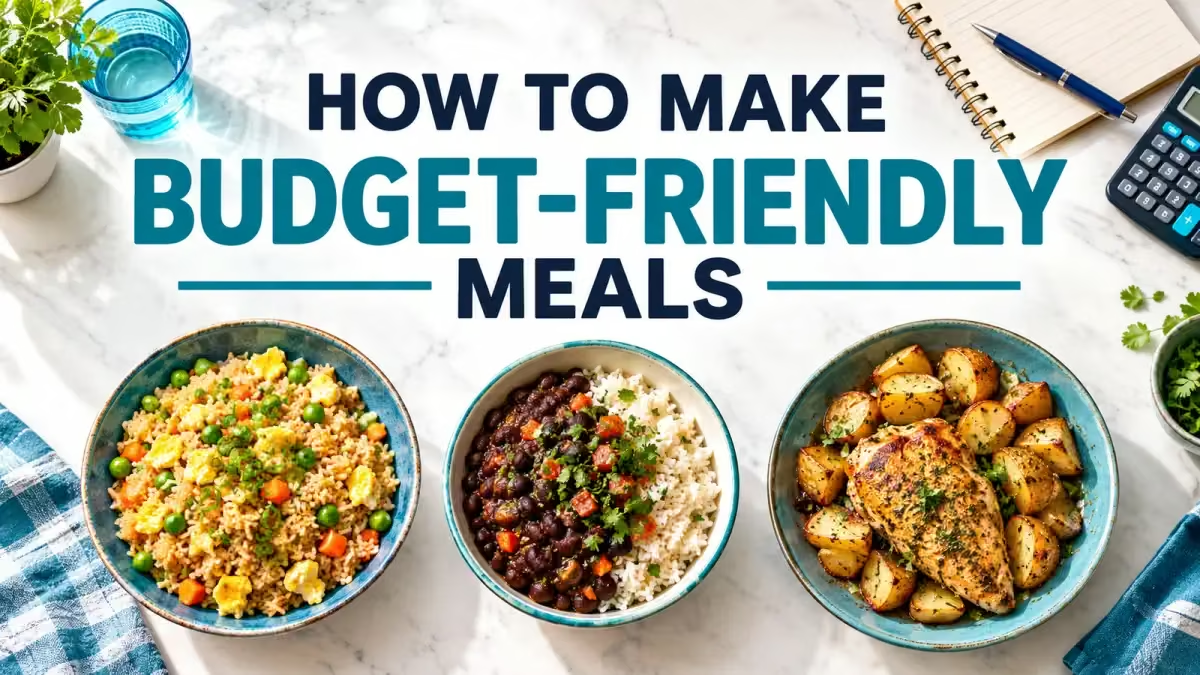
Quick answer: To make budget-friendly meals, build dinners around cheap staples like rice, dried beans, eggs, and chicken. Shop by unit price, and cook one batch you can remix across the week. At August 2026 average U.S. prices, the six dinners below cost about $0.78 to $1.97 per serving. We assume a takeout meal costs around $15.
Open your bank app and look at the food line. If it shows more takeout than you’d like to admit, you’re in good company. The Bureau of Labor Statistics says the average U.S. household spent $3,945 on food away from home in 2024, and that figure includes restaurant, delivery, and takeout meals.
That isn’t a moral failing. After a long day, tapping a delivery app is easy, and cooking is work. But food is one of the few budget lines you control three times a day, which makes it one of the fastest places to find extra money.
Most advice on how to make budget friendly meals is a pile of recipes with no numbers attached. This is a money blog, so we did the math. Below you’ll find six cheap dinners costed at current average prices, a simple system for cooking once and eating several ways, and an honest look at what the savings are worth if you invest them.
Key Takeaways
- When learning how to make budget friendly meals, you can cook filling dinners for about $0.78 to $1.97 a serving using staples like rice, dried beans, eggs, and chicken.
- Swapping three takeout meals a week for home cooking could save roughly $169 a month, based on $15 per takeout meal and $2 per home meal. Those are our assumptions, so use your own.
- Shop by unit price, not by the big number on the shelf.
- Cook one base batch and remix it, and keep a flex meal ready for tired nights.
- A sell-by date is not a safety date, but the USDA still wants you to cook or freeze meat within set times.
Why Cooking at Home Is a Money Move
Food is a big slice of any budget. In 2024, the average household spent $10,169 on food, which was 12.9% of all spending. Of that, $6,224 went to food at home and $3,945 to food away from home. The same BLS release has the full breakdown.
Here’s what swapping takeout for home cooking is worth, using $15 per takeout meal and $2 per home-cooked serving:
| Meals Swapped Per Week | Weekly Savings | Monthly Savings | Annual Savings |
|---|---|---|---|
| 1 | $13 | $56 | $676 |
| 3 | $39 | $169 | $2,028 |
| 5 | $65 | $282 | $3,380 |
Now imagine you don’t spend that $169 a month. If you invest it for 30 years and earn an average of 7% a year, you’d end up with roughly $206,000, and only $60,840 of that would be your own contributions. At 6% it’s about $170,000, and at 8% about $252,000. Those are illustrations, not promises, because real returns bounce around from year to year. If you’re new to investing, start with our guide to How to Start Investing for Beginners, or see how small monthly contributions compound over decades in our guide to planning for retirement in your 20s.
What Is a Budget-Friendly Meal?
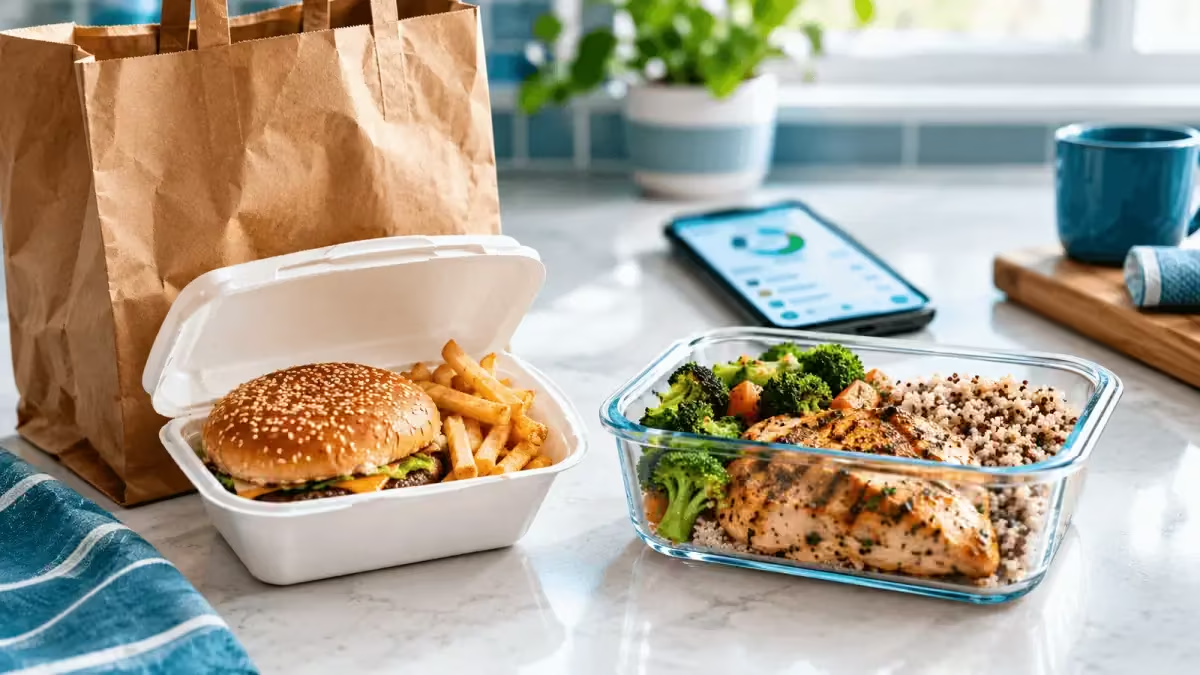
When looking for how to make budget friendly meals, a good rule of thumb is that a meal costs well below the same food bought out, is built on cheap staples, and reuses ingredients across the week. A handy target is about $2 or less per serving at home. That’s a rule of thumb we use on this site, not an official standard.
How Much Should You Spend on Groceries?
The USDA publishes monthly food plan costs. These are benchmarks, not rules, and they assume every meal is cooked at home. Here are the May 2026 figures for adults aged 19 to 50:
| USDA Plan | Man, per month | Woman, per month |
|---|---|---|
| Low-cost | $316.00 | $274.80 |
| Moderate-cost | $397.00 | $335.60 |
The low-cost plan works out to roughly $9 to $10.50 a day. If you spend well above the moderate plan and also eat out, there’s likely room to trim. See the USDA monthly Cost of Food reports for the latest monthly benchmarks and other age groups (note that USDA reference tables are calculated for individuals in a four-person household; USDA recommends adding about 20% for a single-person household).
Six Cheap Dinners, With the Math
To cost these meals, we used August 2026 U.S. average prices for staples. For items without an average price, we used assumed prices and flagged them. Your local prices will differ, so swap in your own.
| Ingredient | Price used | Source |
|---|---|---|
| White rice | $1.11 per lb | BLS, Aug 2026 |
| Dried beans | $1.63 per lb | BLS, Aug 2026 |
| Eggs, large | $2.27 per dozen | BLS, Aug 2026 |
| Chicken legs, bone-in | $1.67 per lb | BLS, Aug 2026 |
| Whole chicken | $2.01 per lb | BLS, Aug 2026 |
| Ground beef | $6.92 per lb | BLS, Aug 2026 |
| Chicken breast, boneless | $4.17 per lb | BLS, Aug 2026 |
| Frozen mixed vegetables | $1.75 per lb | Our assumption |
| Potatoes and onions | $1.00 per lb | Our assumption |
| Canned tomatoes | $1.25 per can | Our assumption |
| Oil, sauces and spices | $0.30 to $0.60 per meal | Our assumption |
Here’s what each dinner costs, from cheapest to most expensive per serving:
| Dinner | Servings | Total cost | Per serving |
|---|---|---|---|
| Egg fried rice | 4 | $3.14 | $0.78 |
| Beans and rice bowls | 4 | $3.42 | $0.85 |
| Chicken stir-fry | 4 | $7.08 | $1.77 |
| Beef and bean chili | 6 | $11.23 | $1.87 |
| Sheet-pan chicken legs and potatoes | 4 | $7.51 | $1.88 |
| Roast whole chicken with rice and vegetables | 6 | $11.85 | $1.97 |
1. Egg fried rice ($0.78 a serving)
Use about 0.6 lb of rice, 4 eggs, and 0.75 lb of frozen vegetables. Day-old rice fries best. Scramble the eggs first, fry the vegetables, toss in the rice, and finish with soy sauce and garlic.
2. Beans and rice bowls ($0.85 a serving)
Simmer half a pound of dried beans with an onion, a can of tomatoes, and spices until tender, then spoon them over rice. Dried beans need soaking and time, but they cost a fraction of takeout.
3. Chicken stir-fry ($1.77 a serving)
Slice a pound of boneless chicken breast, cook it hot and fast, add a pound of frozen vegetables and a simple sauce, and serve over rice.
4. Beef and bean chili ($1.87 a serving)
Brown a pound of ground beef with an onion, then simmer it with beans, canned tomatoes, and spices. This makes six servings and freezes very well.
5. Sheet-pan chicken legs and potatoes ($1.88 a serving)
Roast about 3 lb of chicken legs with 2 lb of cut potatoes, oil, and seasoning on a sheet pan until the chicken is done. Cleanup is one pan.
6. Roast whole chicken with rice and vegetables ($1.97 a serving)
A 4.5 lb whole chicken feeds six when paired with rice and vegetables. Save the bones and simmer them into stock for your next pot of beans.
Food safety note: Cook poultry to an internal temperature of 165°F and ground beef to 160°F according to the USDA Food Safety and Inspection Service (FSIS) safe temperature chart, and check with a food thermometer.
How to Make Budget Friendly Meals: The 5-Step System
Step 1: Shop by Unit Price
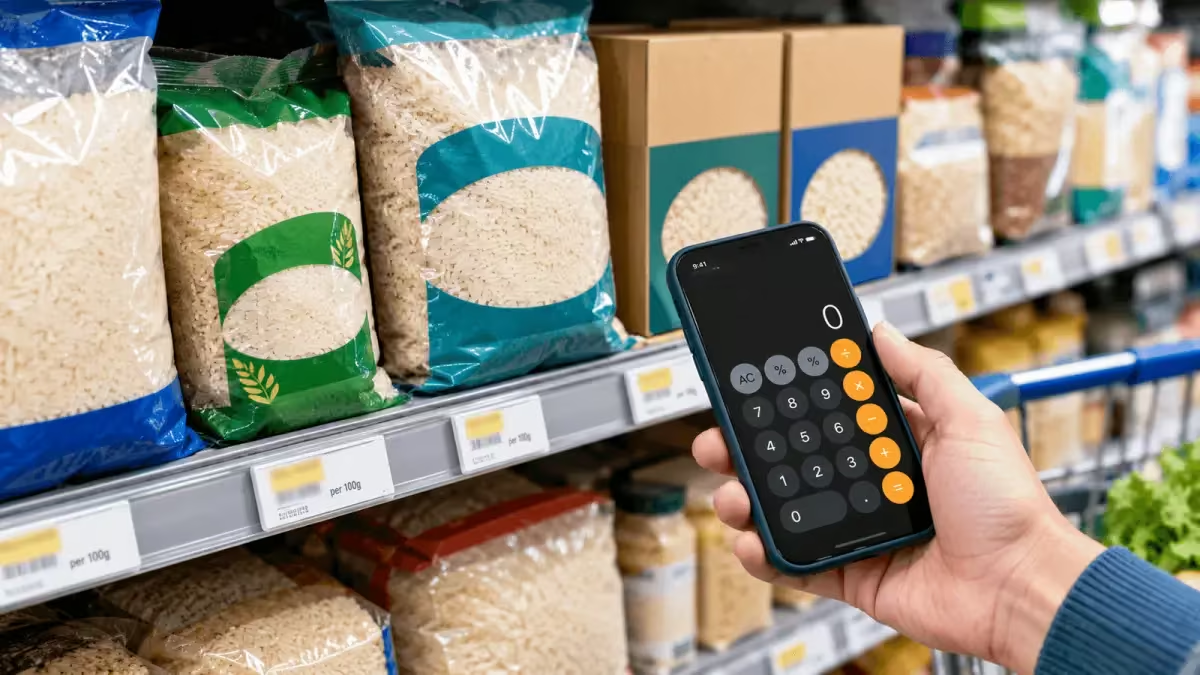
The shelf price tells you what you’ll pay today. The unit price tells you what you’re actually buying. Say a $6 bag of rice makes about 20 servings, or 30 cents each, and a $2 instant-rice box makes 2 servings, or a dollar each. The big bag costs three times as much on the shelf but about 70% less per serving. Those numbers are an example, so check your own store’s tags. Look for the small label that lists the price per ounce or per pound, and compare brands and sizes using that number.
Step 2: Cook Once, Eat Three Ways
Meal prep gets a bad name because people copy the fitness-influencer version: six hours on Sunday and fifteen identical boxes of chicken and broccoli. By Wednesday you’re sick of it. Try an 80/20 approach instead.
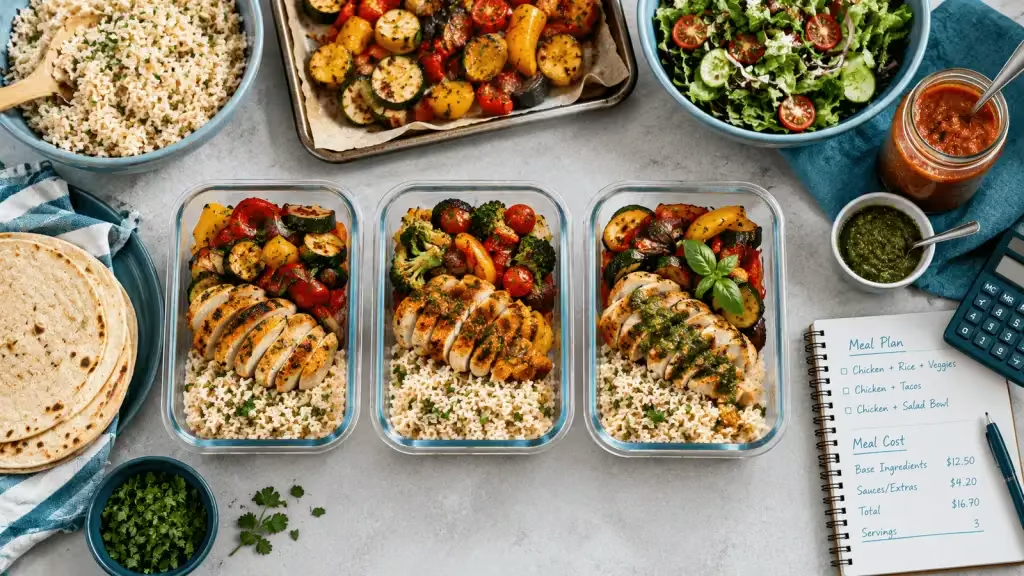
The 80%: cook a big pot of rice or beans, a tray of roasted vegetables, and one protein. The 20%: add the flavor later with cheap sauces, tortillas, spices, or a bag of salad.
On Monday the base becomes tacos. On Tuesday it becomes a stir-fry. On Wednesday it goes into a bowl with an egg on top. You cooked once, but you ate three different dinners.
Step 3: Keep a Flex Meal Ready
Some nights you’ll be exhausted and the delivery app will start to look like a rescue. Plan for that. Keep one low-effort backup in the house, such as a frozen pizza or a box of pasta with a jar of sauce. It costs a fraction of delivery and it still lets you do nothing. A backup that costs $3 beats a $30 delivery order every time.
Step 4: Buy Meat Smartly
Meat is usually the most expensive part of dinner, so a few habits help. Chicken legs and whole chickens are often cheaper per pound than boneless breasts. Buy larger packs when the unit price is lower and freeze what you won’t use soon. The date on the package matters too: a sell-by date tells the store how long to display the product, not when it turns unsafe, but the USDA still says to cook or freeze meat and poultry within set times of buying it. See the USDA Food Safety and Inspection Service for the storage chart, thaw meat in the fridge, and discard anything that smells off.
Step 5: Track the Savings
Savings that aren’t tracked disappear. Give food its own line in your budget, then move the amount you save into something with a job, like your emergency fund or a debt payment. If you haven’t set up a budget yet, start with our post on 15 Budgeting Tips That Actually Work in 2026.
Putting your grocery savings toward credit cards? Plug that extra $56 to $169 a month into our debt payoff calculator to see how many months sooner you’ll be debt-free.
Common Mistakes to Avoid
- Shopping without a list. You end up buying what looks good, not what makes meals.
- Buying pre-cut and pre-washed food every time. Convenience costs extra, so save it for your busiest weeks.
- Cooking recipes that need rare ingredients. One bottle you use once is wasted money.
- Buying in bulk without a plan. A cheap unit price means nothing if half of it spoils.
- Cutting food joy to zero. Budgets with no treats get abandoned.
My Opinion: What I’d Do, and What We Recommend
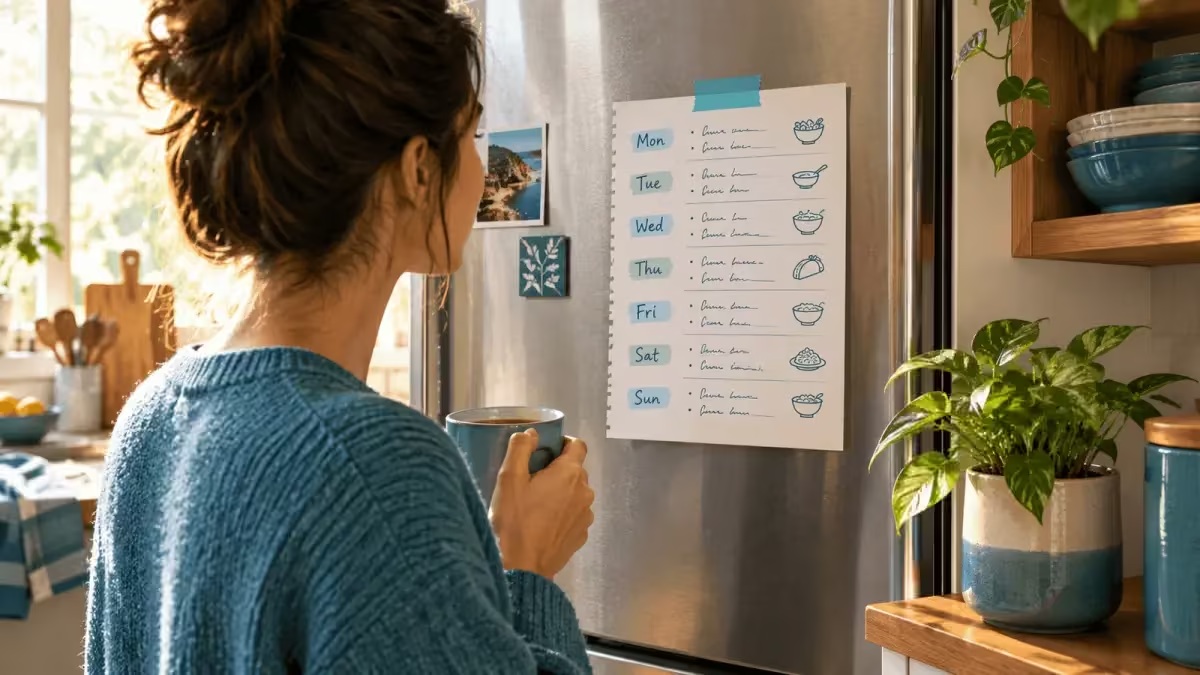
I think a lot of money advice about food is out of touch. Telling people to eat rice and beans every night treats food like a punishment, and a budget that feels like a punishment doesn’t last. The goal isn’t the cheapest possible meal. It’s the cheapest way to eat something you actually want.
I also think strict weekly meal plans are overrated. Deciding seven dinners in advance is tiring. I’d rather have three or four default dinners you can cook without thinking, one flex meal, and one night each week for a treat.
What we recommend at MoneyPulsar:
- Look at last month’s food spending and split it into groceries and eating out.
- Pick three dinners from the list above and cook them this week.
- Swap two takeout meals for home cooking, and note what you save.
- Move that saved money into your emergency fund, a debt payment, or an investment account.
- Review after a month and keep what felt easy.
Your turn: what’s your go-to cheap dinner? Tell us in the comments.
Budget-Friendly Meals FAQ
What is the cheapest way to make budget-friendly meals?
Build meals around inexpensive staples like rice, dried beans, eggs, and chicken legs, shop by unit price, and cook in batches. Reusing the same base across several dinners cuts waste and saves time.
How much does it cost to eat at home per day?
USDA’s low-cost food plan for May 2026 is $274.80 a month for a woman and $316 for a man aged 19 to 50, which is roughly $9 to $10.50 a day. Your cost depends on where you live and how you shop.
Is meal prep cheaper than cooking every day?
Usually, mostly because it reduces food waste and impulse takeout orders. The savings aren’t guaranteed, so track your own spending for a month to see.
What are the cheapest proteins?
Based on August 2026 BLS averages, dried beans are about $1.63 a pound, whole chicken about $2.01 a pound and chicken legs about $1.67 a pound, while boneless chicken breast is about $4.17 and ground beef about $6.92. Eggs are about $2.27 a dozen.
How can I eat cheap without getting bored?
Cook one base and change the flavor with sauces, spices, and sides. Rotate three or four default dinners and add one new recipe a week.
Is buying in bulk worth it?
Only if the unit price is lower and you’ll use it before it spoils. Freezer space helps a lot with meat and bread.
Is it safe to freeze meat on its sell-by date?
Yes, in general. A sell-by date is for the store, not a safety deadline, but USDA guidance says to cook or freeze meat and poultry within set times of purchase. Thaw it in the refrigerator and cook it to safe temperatures.
How much should one person spend on groceries a month?
USDA’s May 2026 low-cost plan is about $275 to $316 a month for adults aged 19 to 50, and the moderate plan is about $336 to $397. Your actual number depends on your location and diet.
The Bottom Line
Knowing how to make budget friendly meals isn’t about eating sad food. It’s about spending less on the meals you’d cook anyway, and using the difference on something that builds your future. Start small: cook three of the dinners above this week, swap two takeout meals, and see what you save.
Keep reading: 15 Budgeting Tips That Actually Work | How to Pay Off Debt in 2026 | How to Make Passive Income in 2026
This article is for educational purposes only and is not financial or nutrition advice. Prices vary by store and region, and investment returns are not guaranteed. Consider speaking with a licensed professional about your situation, and read our full Financial Disclaimer.

Syed Hamza Hasnain · Founder & Editor
Syed Hamza Hasnain is the Founder and Editor of MoneyPulsar. He researches and edits practical guides on budgeting, debt payoff, index investing, and retirement planning across our US and Pakistan tracks using primary regulatory sources. Learn more about our editorial process →