
Trading looks exciting on social media. Someone posts a screenshot showing $2,000 in daily profits, another shares a luxury lifestyle funded by forex, and a third claims to have turned $500 into $50,000 through cryptocurrency.
But there’s a side of trading those screenshots rarely show: losing trades, transaction fees, emotional decisions, margin calls, and accounts that disappear after a few bad decisions.
If you’re researching how to start trading, here’s something you should understand before depositing your first dollar: trading isn’t a get-rich-quick scheme. It’s a high-risk activity that requires knowledge, discipline, risk management, and the right trading platform.
You don’t need thousands of dollars to begin learning. You do need a realistic plan.
This guide explains how stock, forex, and cryptocurrency trading work, how to choose a platform, how much trading actually costs, and what beginners should know before risking real money in 2026.
Trading vs. Investing: What’s the Difference?
Quick answer
Investing is a long-term strategy focused on compound growth and owning assets. Trading is a short-term strategy focused on attempting to profit from market volatility and price movements.
People often use the words trading and investing interchangeably, but they’re different activities.
When you invest, you generally buy an asset because you believe it can increase in value over several years. You might purchase shares of a company, an index fund, or real estate and hold them for an extended period.
When you trade, you’re usually more interested in shorter-term price movements.
For example:
- An investor might purchase Apple shares and hold them for 10 years.
- A swing trader might buy Apple shares and sell them after several days or weeks.
- A day trader might purchase Apple shares in the morning and sell them before the market closes.
The main difference is the holding period, trading frequency, and objective.
Trading vs. Investing: Side-by-Side Comparison
| Feature | Trading | Investing |
|---|---|---|
| Main objective | Profit from price movements | Build long-term wealth |
| Holding period | Seconds to months | Years or decades |
| Trading frequency | Often high | Usually low |
| Research | Charts, technical analysis, news | Financial statements, fundamentals |
| Risk | Often higher due to frequent trading and leverage | Depends on assets and allocation |
| Time commitment | Can be substantial | Usually less intensive |
| Costs | Can accumulate quickly | Often lower with buy-and-hold strategies |
| Tax considerations | Frequent taxable transactions may apply | Depends on holding period and account type |
Neither approach guarantees a profit.
However, beginners should understand that active trading is generally more demanding and can be considerably more expensive than a diversified long-term investment strategy.
If your primary goal is building retirement wealth rather than generating short-term profits, read our beginner’s guide to investing.
How to Start Day Trading (The High-Risk Path)
Quick answer
Day trading involves buying and selling financial securities within the same trading day to attempt to profit from short-term price movements. It’s one of the most demanding trading strategies and carries a substantial risk of financial loss.
A day trader doesn’t usually want to hold a position overnight.
Instead, they look for opportunities during market hours and attempt to close their positions before the trading session ends.
For example:
- You identify a stock trading at $50.
- You purchase 100 shares for $5,000.
- The stock rises to $51.
- You sell all 100 shares.
- Your gross profit is $100, before fees and taxes.
Sounds simple, right?
The difficult part is identifying which stocks will move, predicting the direction correctly, choosing an entry price, and controlling losses when the market moves against you.
Common Day Trading Strategies
Beginners will often encounter these terms:
1. Scalping
Scalpers attempt to capture very small price movements through multiple trades.
They may hold positions for seconds or minutes and rely on frequent trading opportunities.
The problem? Spreads, commissions, and execution delays can quickly consume small profits.
2. Momentum Trading
Momentum traders look for securities experiencing strong upward or downward price movements.
They attempt to enter while the movement continues and exit before momentum weakens.
3. Breakout Trading
A breakout occurs when a security moves beyond an established support or resistance level.
Traders attempt to profit from the potential continuation of that movement.
However, false breakouts can quickly reverse and create losses.
4. News Trading
News traders react to earnings reports, economic announcements, company announcements, and other market-moving events.
Prices can move extremely quickly during major announcements, making execution difficult.
The Reality: Do Most Day Traders Make Money?
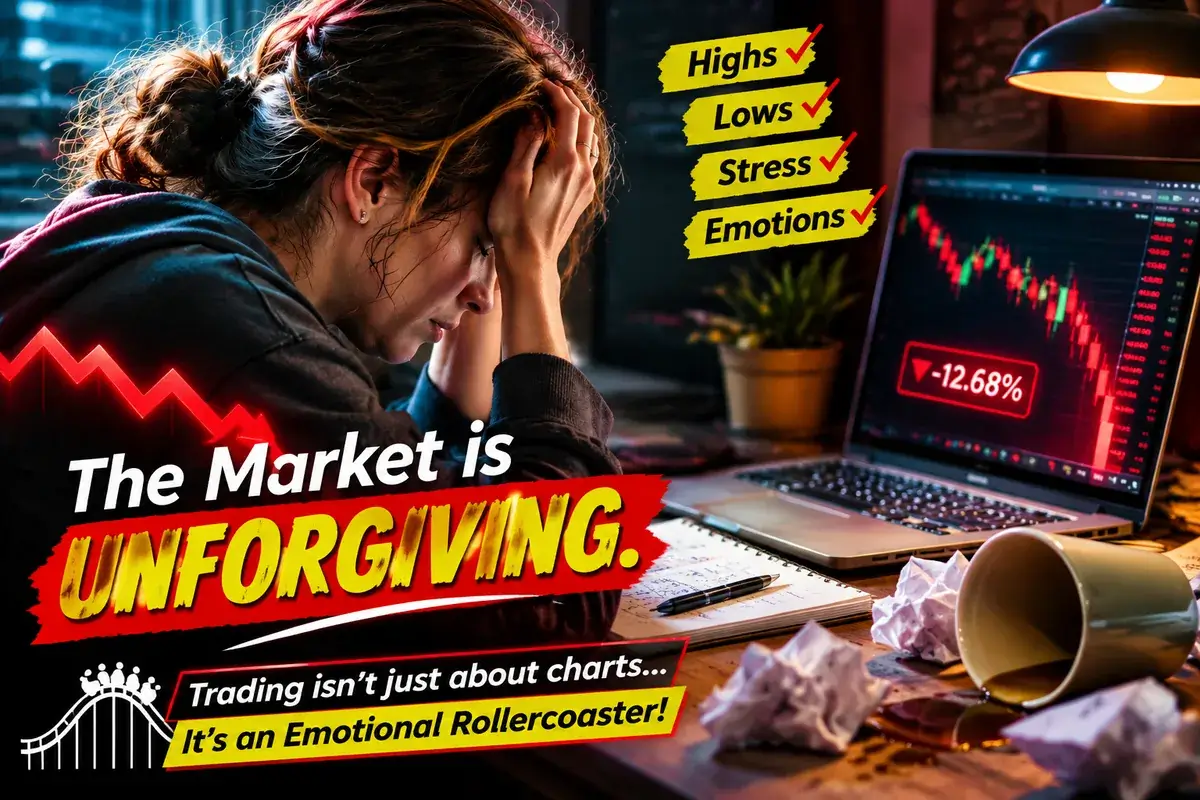
Here’s where you need to be careful.
There isn’t one reliable, current FINRA statistic that establishes an exact percentage of all US day traders who lose money.
However, the regulatory warnings are serious.
The SEC’s investor publication, Day Trading: Your Dollars at Risk, warns that day traders typically experience severe financial losses during their first months and that many never become profitable.
FINRA also warns that day trading is generally unsuitable for people with limited financial resources, limited trading experience, or low risk tolerance.
Risk warning
This isn’t a small risk that you can ignore.
You could lose your entire trading account, and margin trading can expose you to losses greater than your initial deposit.
My advice: Don’t begin day trading with money needed for rent, bills, education, retirement, or emergency expenses. If losing the money would affect your daily life, don’t put it into a trading account.
How to Start Trading Stocks
Quick answer
To start trading stocks, open an account with a suitable brokerage firm, learn how stock orders work, understand the risks of margin, and develop a strategy before placing your first trade.
Stock trading involves buying and selling shares of publicly traded companies through a brokerage account.
In the United States, stocks are traded through exchanges and other trading venues, including the New York Stock Exchange (NYSE) and Nasdaq.
You don’t need to visit an exchange physically.
An online brokerage platform allows you to submit orders electronically.
Step 1: Understand What You’re Trading
Before purchasing a stock, understand:
- The company’s business.
- Its financial condition.
- Recent earnings and announcements.
- Trading volume and liquidity.
- Price volatility.
- The risks associated with the company.
A stock moving up 10% in one day doesn’t automatically mean it’s a good buying opportunity.
Sometimes, a sudden price increase is followed by an equally sudden decline.
Step 2: Learn the Main Order Types
There are several ways to place a stock trade.
The two most important orders beginners should understand are market orders and limit orders.
Market Order
A market order tells your broker to buy or sell at the best available price.
For example, if a stock is trading around $50, you submit a market order to buy 20 shares.
The order will generally execute quickly, but you aren’t guaranteed to receive exactly $50 per share.
In a fast-moving market, the execution price could be higher.
Limit Order
A limit order lets you specify the maximum price you’re willing to pay or the minimum price you’re willing to accept when selling.
For example, you want to buy a stock currently trading at $50, but you don’t want to pay more than $48.
You place a buy limit order at $48.
Your order will only execute at $48 or lower, but it may never execute if the stock doesn’t reach your price.
| Order Type | Main Purpose | Main Risk |
|---|---|---|
| Market order | Execute quickly at available prices | Execution price isn’t guaranteed |
| Limit order | Control the acceptable price | Order may not execute |
| Stop order | Trigger an order when a specified price is reached | Execution price may differ from stop price |
| Stop-limit order | Trigger a limit order at a specified price | Order may remain unfilled |
The SEC explains these differences in its Investor Bulletin on Order Types.
Step 3: Understand the 2026 Pattern Day Trader Rule Changes
This is especially important if you’re researching how to start day trading stocks in the United States.
Many older trading guides still say you need $25,000 in your margin account before you can make frequent day trades.
That was the traditional Pattern Day Trader (PDT) requirement, but FINRA changed its rules in 2026.
Under the previous rule:
- Four or more day trades within five business days could trigger pattern day trader classification if those trades represented more than 6% of the account’s total trades during that period.
- A designated pattern day trader generally needed at least $25,000 in account equity.
- Additional day-trading buying power restrictions applied.
What’s changed in 2026?
FINRA adopted new intraday margin standards to replace the traditional PDT framework (FINRA Regulatory Notice 26-10, approved by the SEC on April 14, 2026).
The changes became effective June 4, 2026.
Under the new framework:
- The old $25,000 PDT minimum is eliminated for firms operating under the new standards.
- The old pattern day trader designation based on counting trades is removed.
- Brokerage firms monitor margin requirements throughout the trading day.
- Accounts with insufficient equity can develop intraday margin deficits.
- Repeated failure to meet those requirements can result in trading restrictions.
Transition period
However, there’s an important transition period.
Brokerage firms have until October 20, 2027, to complete their transition. Some firms may still apply the old PDT requirements during this period.
What should beginners do?
Check your broker’s current margin policy before making frequent day trades. Don’t assume every brokerage has implemented the new system.
Read FINRA’s official explanation: Understanding the New Intraday Margin Requirements.
Also remember that trading in a cash account doesn’t eliminate all restrictions. Most US stock trades settle on a T+1 basis, meaning settlement generally occurs the next business day. You must follow settled-funds and cash-account rules to avoid violations.
How to Start Forex Trading
Quick answer
Forex trading involves buying one currency while simultaneously selling another. Beginners should understand currency pairs, spreads, leverage, and broker regulation before opening a live forex account.
Forex stands for foreign exchange.
It’s the global market where currencies are exchanged against one another.
Unlike the traditional stock market, retail forex trading frequently takes place through over-the-counter (OTC) dealers rather than a centralized exchange.
How Does Forex Trading Work?
Currencies are quoted in pairs.
For example:
- EUR/USD: Euro against US dollar.
- GBP/USD: British pound against US dollar.
- USD/JPY: US dollar against Japanese yen.
- USD/CAD: US dollar against Canadian dollar.
Suppose EUR/USD is trading at 1.1000.
This means one euro is worth approximately $1.10.
If you believe the euro will strengthen against the dollar, you might buy EUR/USD.
If the exchange rate increases to 1.1100, your position may generate a profit, depending on its size and trading costs.
If the exchange rate falls, you lose money.
Understand Forex Leverage Before Trading
Leverage allows traders to control a position larger than their deposited capital.
For example, suppose a forex dealer offers a 2% margin requirement.
You deposit $2,000 and open a $100,000 position.
Your leverage is 50:1.
In the United States, the CFTC and NFA require retail forex dealers to collect at least 2% margin on major currency pairs and 5% on other pairs. That caps retail forex leverage at 50:1 on majors and 20:1 on other pairs. Offshore brokers offering more than that are a red flag (CFTC advisory).
Leverage warning
That means a 1% unfavorable movement in the position represents a $1,000 loss, or half your original $2,000 margin deposit, before costs and any applicable close-out rules.
A relatively small market movement can therefore create a substantial loss.
What Percentage of Forex Traders Lose Money?
The Commodity Futures Trading Commission (CFTC) provides an important warning.
Its Eight Things You Should Know Before Trading Forex advisory reported that approximately two out of three customers at registered OTC forex dealers lost money over the year covered by the reported data.
The underlying figures relate to Q2 2021 through Q1 2022, so they shouldn’t be presented as a live 2026 loss rate.
Still, the findings demonstrate how difficult leveraged forex trading can be.
How to Protect Yourself When Starting Forex
Before opening an account:
- Check whether the dealer is registered with the CFTC where required.
- Check its registration and disciplinary history through the National Futures Association (NFA).
- Understand spreads and overnight financing charges.
- Avoid excessive leverage.
- Never send money to someone promising guaranteed forex profits.
- Read the withdrawal conditions carefully.
You can check registration through NFA BASIC.
Be particularly careful with offshore brokers advertising unusually high leverage or guaranteed returns.
How to Start Trading Cryptocurrency
Quick answer
Cryptocurrency trading involves buying and selling digital assets such as Bitcoin and Ethereum through cryptocurrency platforms or other eligible financial products. It’s highly speculative, operates around the clock in many spot markets, and carries substantial market, custody, and fraud risks.
Cryptocurrency has become popular because traders can access digital asset markets without following the traditional stock market’s opening and closing hours.
Many cryptocurrency spot markets operate 24 hours a day, seven days a week.
That flexibility comes with a downside: prices can change dramatically while you’re sleeping.
How Does Cryptocurrency Trading Work?
Let’s say Bitcoin is trading at $60,000.
You purchase 0.1 Bitcoin for $6,000.
If Bitcoin increases to $66,000, your holding is worth $6,600.
Your gross profit is $600.
However, if Bitcoin falls to $54,000, your holding becomes worth $5,400.
You’ve lost $600.
These numbers are hypothetical and don’t include transaction fees.
Why Cryptocurrency Trading Is Risky
There are several risks worth understanding.
1. Extreme Price Volatility
Cryptocurrency prices can experience significant movements within short periods.
A popular coin can lose a substantial portion of its value even when the overall market appears healthy.
2. Exchange and Custody Risks
Buying cryptocurrency doesn’t automatically mean your assets are protected like money held in an insured bank account.
You need to understand where your assets are stored, who controls the private keys, and what happens if the platform becomes insolvent.
3. Platform Failures
The collapse of FTX in November 2022 is an important example.
The exchange halted customer withdrawals before filing for bankruptcy. The subsequent revelations about the misuse of customer assets demonstrated that a popular trading platform isn’t automatically a safe place to hold money.
4. Hacking and Fraud
Fake exchanges, phishing websites, fraudulent investment groups, and impersonation scams can result in permanent financial losses.
The SEC’s Crypto Asset Investor Alert explains why investors should carefully evaluate the platforms and services involved in crypto transactions.
The CFTC also warns about the risks of cryptocurrency platforms, including hacking, manipulation, and inadequate customer protections.
How to Approach Crypto Trading Safely
If you decide to explore cryptocurrency:
- Start by understanding the asset you’re purchasing.
- Use a platform with a verifiable operating history.
- Enable multifactor authentication.
- Never share your private keys or recovery phrase.
- Understand withdrawal fees and limits.
- Avoid borrowing money to trade volatile assets.
- Don’t trust guaranteed-return offers.
Scam alert
The FTC reported more than $7.9 billion in reported losses from investment scams during 2025, with a median individual loss exceeding $10,000.
Social media, messaging apps, and fake investment coaching offers are common ways scammers approach potential victims.
Source: FTC – Investment Scam Warning.
Step 1: Choose the Right Trading Platform
Quick answer
The right trading platform should provide transparent fees, reliable order execution, suitable charting tools, strong account security, and verifiable regulatory information for the products it offers.
Your trading platform is where you’ll manage your money, analyze markets, and execute orders.
Choosing one simply because an influencer recommends it is a mistake.
Take time to compare your options.
What to Look for in Day Trading Platforms
1. Transparent Trading Fees
Check the full cost of trading, including:
- Stock commissions.
- Options contract fees.
- Spreads.
- Margin interest.
- Market data subscriptions.
- Withdrawal fees.
- Platform subscription charges.
A platform advertising commission-free trading may still generate revenue through spreads or other charges.
2. Reliable Execution
Execution quality matters, particularly when trading volatile securities.
Check whether orders execute reliably and whether the broker provides clear information about order routing and execution quality.
3. Professional Charting Tools
Useful charting features include:
- Candlestick charts.
- Volume indicators.
- Moving averages.
- RSI.
- MACD.
- Trend lines.
- Support and resistance tools.
Don’t assume that having 50 technical indicators will make you a profitable trader. Learn a small number of tools properly.
4. Account Security
Look for:
- Multifactor authentication.
- Login alerts.
- Withdrawal controls.
- Secure account recovery.
- Clear custody arrangements.
5. Regulatory Verification
For US stock trading, check your brokerage firm and registered representatives using FINRA BrokerCheck.
For investment advisers, use the SEC’s Investment Adviser Public Disclosure database.
For retail forex, check the relevant CFTC and NFA registration requirements.
For cryptocurrency platforms, investigate the exact legal entity and services being offered. Don’t assume that a company’s registration for one financial service automatically regulates every crypto product on its platform.
Warning Signs of a Bad Trading Platform
Avoid platforms that:
- Promise guaranteed daily profits.
- Offer unrealistic returns with no risk.
- Pressure you to deposit more money.
- Refuse to explain withdrawal restrictions.
- Have no verifiable business information.
- Encourage you to transfer funds through personal wallets.
- Claim to be officially approved without verifiable evidence.
Remember: a professional-looking website doesn’t prove that a trading company is legitimate.
Step 2: Start with a Paper Trading Account
Quick answer
Paper trading allows beginners to practice buying and selling financial assets using virtual money instead of risking real capital. It’s a useful way to test a trading strategy before opening a live position.

If you’re completely new to trading, don’t rush to deposit money.
Start with a simulated trading account.
Most major trading platforms offer some form of paper trading or demo account, although features and market data availability vary.
How Paper Trading Works
Suppose your simulated account starts with $10,000.
You decide to practice trading a stock.
- Entry price: $50.
- Number of shares: 20.
- Total simulated position: $1,000.
- Exit price: $52.
- Gross simulated profit: $40.
No actual money changes hands.
You can repeat this process, experiment with different strategies, and learn how orders behave.
How Long Should You Practice?
A reasonable beginner target is three to six months of consistent practice.
This isn’t an official regulatory requirement or a guarantee that you’ll become profitable.
Use that period to develop a trading routine.
I recommend tracking at least 50–100 practice trades before considering a small live position.
Record:
- Entry price.
- Exit price.
- Stop-loss level.
- Reason for entering.
- Reason for exiting.
- Gross profit or loss.
- Estimated spreads and commissions.
- Mistakes made.
What Should You Prove Before Trading Real Money?
Don’t move to live trading just because you made money in a demo account.
Look for evidence that:
- You follow your trading plan consistently.
- Your strategy remains viable after estimated costs.
- You understand your average losing trade.
- You can handle several losses without abandoning your rules.
- Your results aren’t dependent on one unusually successful trade.
Paper trading has limitations.
Simulated orders may fill differently from live orders, and virtual losses don’t create the same emotional pressure as losing real money.
That’s why a successful demo account is a starting point, not proof of future profitability.
Step 3: Build a Risk Management Plan
Quick answer
A trading strategy is incomplete without rules that determine how much you’re willing to lose, when you’ll exit a position, and when you’ll stop trading for the day.
This is the part beginners often ignore.
They spend hours looking for winning indicators but barely think about how to protect their capital.
Before entering a trade, answer three questions:
- How much can I lose?
- Where will I exit if I’m wrong?
- Is the potential reward worth the risk?
Understand Position Sizing
Suppose you have a $5,000 trading account.
You decide that your planned risk on one trade will be 0.5% of your account.
Your maximum planned dollar risk is:
$5,000 × 0.005 = $25.
You want to purchase a stock at $50 and set your planned exit level at $49.50.
Your planned risk per share is $0.50.
Position size:
$25 ÷ $0.50 = 50 shares.
You would purchase 50 shares, representing a $2,500 position, with a planned loss of $25 if the exit executes at $49.50.
This is an educational example, not a universal risk percentage.
Actual losses can exceed the planned amount because of price gaps, slippage, liquidity problems, or execution failures.
Never Treat a Stop-Loss as a Guarantee
Important
A stop order is a useful risk-management tool, but it doesn’t guarantee an exact exit price.
When a stop price is reached, a standard stop order becomes a market order.
In a fast-moving market, the final execution price may be significantly different.
A stop-limit order provides more control over execution price, but it may not execute at all.
Understand these differences before relying on any order type.
Establish Daily Loss Limits
You should also decide when to stop trading.
For example, you might establish a personal daily loss limit and stop placing new trades once that threshold is reached.
The exact amount depends on your circumstances and strategy.
The important thing is to prevent a bad trading session from turning into an even bigger loss because you’re trying to recover money emotionally.
The Brutal Math: Why Fees and Taxes Eat Your Trading Profits
Quick answer
A trader’s actual take-home profit is much smaller than the gross profit displayed on a trading screen because commissions, spreads, platform expenses, and taxes reduce the money available to keep.
This is where many beginners get surprised.
They see a $2,000 profit in their trading history and assume they’ve earned $2,000.
But that’s not necessarily what reaches their bank account after expenses and taxes.
Let’s calculate a hypothetical example.
A Trader Makes $2,000 in One Month
Assume a US trader generates $2,000 in realized gross trading gains.
During that month, the trader pays:
- $200 in platform and subscription fees.
- $150 in spreads and commissions.
Here’s the cash-flow calculation:
| Item | Amount |
|---|---|
| Gross realized trading gains | $2,000 |
| Spreads and commissions | -$150 |
| Platform and subscription fees | -$200 |
| Cash profit before estimated tax | $1,650 |
| Illustrative federal tax reserve (24% × $1,850) | -$444 |
| Estimated money remaining | $1,206 |
The $444 tax reserve assumes a simplified taxable gain of $1,850 after $150 in transaction costs, taxed at an illustrative 24% marginal federal income tax rate.
Why not calculate tax on the full $1,650?
Because a typical investor generally cannot automatically deduct platform subscription fees as a business expense. The IRS treats commissions and other costs of acquiring or disposing of securities differently from general platform expenses.
If your activity qualifies as a securities trading business, different expense and accounting rules may apply.
This is an illustration, not a personal tax calculation.
Why Does the 24% Tax Rate Matter?
In the United States, short-term capital gains are generally taxed at ordinary income tax rates.
That means profits from assets held for one year or less don’t automatically qualify for the preferential long-term capital gains rates.
Your actual tax liability depends on:
- Total taxable income.
- Filing status.
- Federal tax bracket.
- State income taxes.
- Realized gains and losses.
- Applicable deductions and elections.
- Other tax circumstances.
Frequent traders should also know the wash sale rule. If you sell a stock or security at a loss and buy the same or a substantially identical security within 30 days before or after the sale, you generally can’t deduct that loss right away; it’s added to the cost basis of the new shares instead (IRS Publication 550).
The IRS explains the difference between investors and traders, including special rules for qualifying securities trading businesses, in Tax Topic 429.
What Happens When You Trade More Frequently?
Suppose you make 100 round-trip trades in a month.
Even if the platform advertises low commissions, every trade can introduce costs through spreads, execution differences, and other charges.
A strategy that looks profitable before expenses may become unprofitable afterward.
That’s why your trading journal should record net results, not just gross profits.
The lesson is simple: Don’t measure your trading performance by how much money you make on winning trades. Measure it by what remains after all costs and losses.
Frequently Asked Questions About Starting Trading
Quick answer
Beginners usually have three important questions before opening a trading account: how much money they need, whether trading is legal, and whether trading can become a full-time career.
1. How Much Money Do I Need to Start Trading?
There isn’t one universal minimum amount.
Some brokerage firms allow eligible customers to open accounts with relatively small deposits, while others have higher account or product-specific requirements.
For example:
- You can often start learning through free paper trading.
- Some stock brokers allow small purchases or fractional shares.
- Forex dealers set their own minimum deposit requirements.
- Cryptocurrency platforms may allow small purchases, subject to minimum order sizes.
- Day trading on margin requires additional capital and compliance with applicable margin rules.
Remember that the amount required to open an account isn’t the amount needed to trade successfully.
Start by learning with virtual money. If you eventually trade live, use only capital you can afford to lose.
2. Is Day Trading Legal in the United States?
Yes. Day trading is legal in the United States.
However, you must comply with applicable securities laws, brokerage requirements, margin rules, and tax obligations.
Your broker may impose additional account restrictions.
Forex and cryptocurrency products also have their own regulatory considerations.
For example, retail OTC forex dealers and associated persons generally must meet applicable CFTC registration requirements.
Always use a properly authorized provider for the specific product you’re trading.
3. Can I Make a Living From Trading?
It’s possible for some people to earn a living through trading, but it’s difficult, unpredictable, and far from guaranteed.
A profitable month doesn’t establish that you have a sustainable trading business.
Imagine you want to generate $4,000 per month from trading.
That’s $48,000 annually before taxes and other expenses.
If you have a $20,000 account, earning that amount consistently would require an extremely high return.
Even a larger account doesn’t guarantee success.
Professional traders also face losing periods, changing market conditions, execution costs, and psychological pressure.
Before considering trading as a full-time career, establish a long record of verifiable results, maintain separate emergency savings, and understand how you’ll handle periods without profits.
My Personal Trading Experience: A Lesson in Discipline
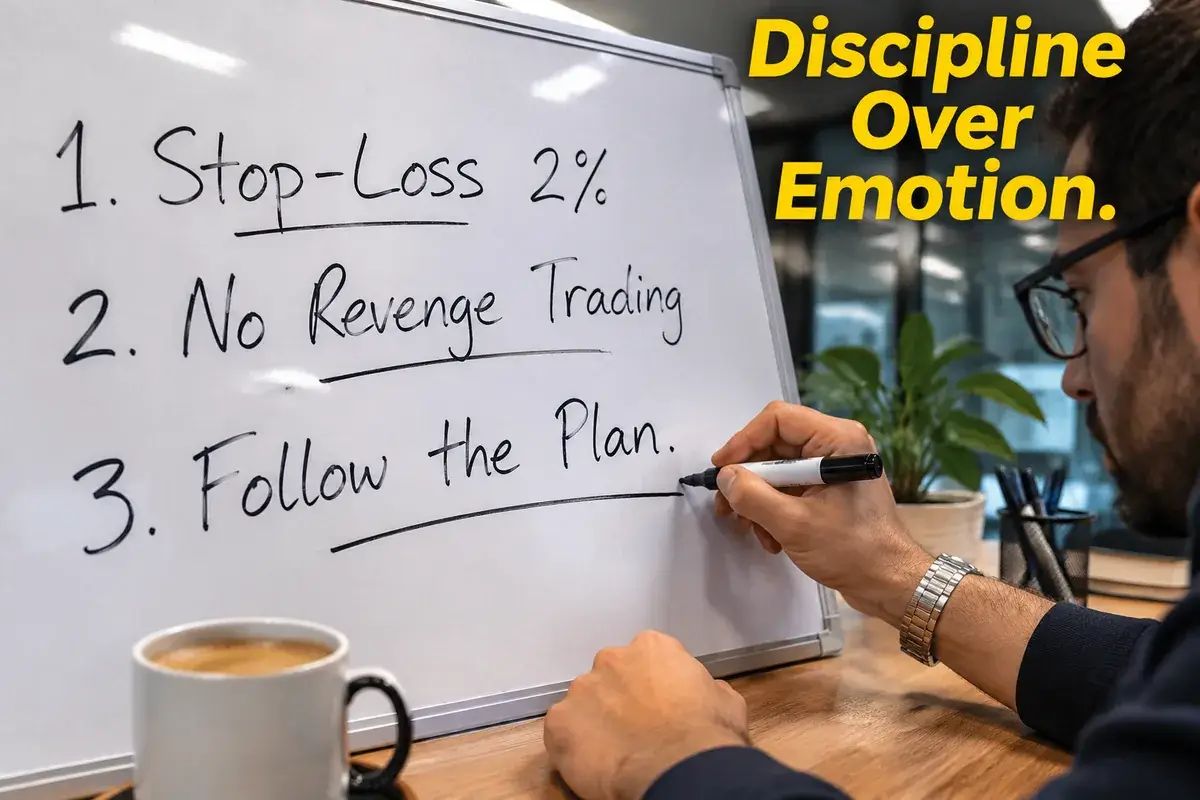
When I first started trading, I thought I could outsmart the market by staring at charts all day. I believed that if I watched enough candles, indicators, and price movements, I’d eventually predict where the market was going.
That wasn’t how things worked.
I lost $500 during my first month because I allowed emotions to influence my decisions. I’d enter trades without a proper plan, hold losing positions longer than I should, and sometimes close profitable trades too early because I was afraid of losing the gains.
Eventually, I realized that my biggest problem wasn’t a lack of indicators. It was a lack of discipline.
I started focusing on risk management instead of trying to predict every market movement. I introduced a written trading plan and a strict rule to keep my planned loss within 2% of my trading capital on each trade. That was my personal rule, not a recommendation for every beginner.
My first meaningful win wasn’t a massive payday. It was a small, calculated trade that produced a 4% return on the position because I followed my plan instead of reacting emotionally.
That experience changed how I looked at trading.
I began to understand that protecting capital matters just as much as finding opportunities. A trader doesn’t need to win every trade. A trader needs to manage losses, remain consistent, and know when not to trade.
For me, trading started to feel like 20% strategy and 80% psychology.
If you can’t control your emotions, even a good strategy can fall apart.
— Syed Hamza Hasnain, Founder of MoneyPulsar
Final Thoughts: Treat Trading Like a Business
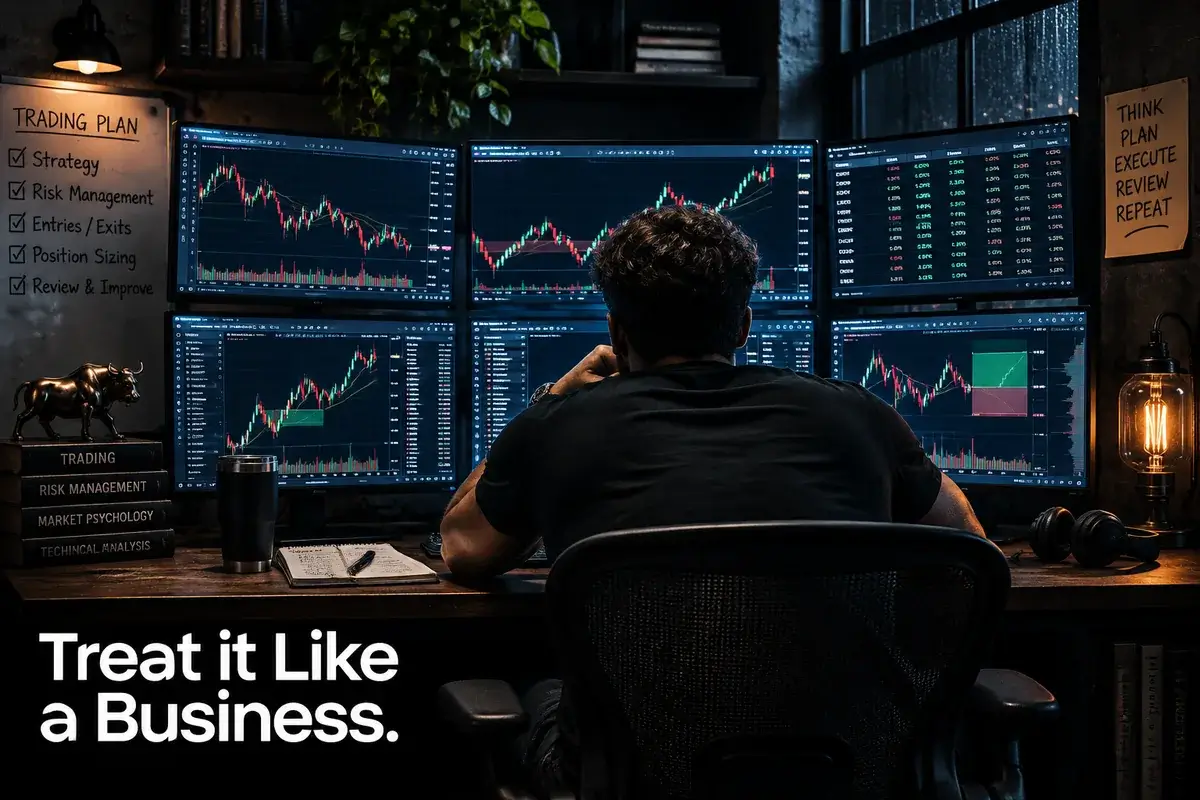
Learning how to start trading is relatively easy.
Building the knowledge, discipline, and risk-management habits required to trade responsibly is much harder.
Don’t confuse a few successful trades with a reliable income source. Don’t borrow money to chase market movements. And don’t believe someone who promises guaranteed profits.
Start with education, practice with virtual money, understand your platform’s fees, and develop a written trading plan.
Track every trade, review your mistakes, and protect your capital.
Most importantly, never risk money you can’t afford to lose.
Trading is a business, not a shortcut to wealth. Approach it with discipline, patience, and a clear understanding of the risks.
Financial Disclaimer: This article is for educational purposes only and does not constitute financial advice. Trading involves significant risk, including the possible loss of principal. Consider consulting a licensed financial professional before making trading decisions. Read our full financial disclaimer.
Sources
- SEC – Day Trading: Your Dollars at Risk
- FINRA Rule 2270 – Day-Trading Risk Disclosure Statement
- FINRA Regulatory Notice 26-10 – New Intraday Margin Standards
- FINRA Investor Insights – Understanding the New Intraday Margin Requirements
- Investor.gov – Margin Rules for Day Trading
- Investor.gov – Understanding Order Types
- SEC – Implementation of the T+1 Settlement Cycle
- CFTC – Eight Things You Should Know Before Trading Forex
- NFA BASIC – Registration and Disciplinary Search
- Investor.gov – Exercise Caution with Crypto Asset Securities
- CFTC – Understand the Risks of Virtual Currency Trading
- FTC – With People Losing Big to Investment Scams, Learn How to Spot and Avoid Them
- FINRA BrokerCheck
- SEC – Investment Adviser Public Disclosure
- IRS – Topic No. 409, Capital Gains and Losses
- IRS – Topic No. 429, Traders in Securities
- IRS – Publication 550, Investment Income and Expenses

Syed Hamza Hasnain · Founder & Editor
Syed Hamza Hasnain is the Founder and Editor of MoneyPulsar. He researches and edits practical guides on budgeting, debt payoff, index investing, and retirement planning across our US and Pakistan tracks using primary regulatory sources. Learn more about our editorial process →