
Disclaimer: This article is for educational purposes only and does not constitute financial advice.
You know you need a budget. You’ve probably heard it a hundred times.
But then you open a blank spreadsheet, stare at the screen, and wonder: What exactly am I supposed to put in here?
Rent? Groceries? Netflix? Car repairs? That random $35 purchase you make every other week?
Suddenly, budgeting feels like another chore you don’t have time for.
Here’s the thing. A budget is really just a set of folders for your money. Each folder represents something you spend, save, or plan for. If you create the wrong folders, you’ll struggle to keep track of your money. If you create too many, you’ll get tired of managing them.
I’ve always preferred keeping things simple. You don’t need 50 different spending categories to understand where your paycheck goes.
You need a practical system that fits your actual life.
In this guide, I’ll walk you through the best basic budget categories, show you how to organize them, and explain how to customize your own budget categories list without making the process unnecessarily complicated.
Let’s get started.
If you want a second opinion along the way, the Consumer Financial Protection Bureau’s free Your Money, Your Goals toolkit (with budgeting worksheets) and its guide on how to create a budget and stick with it are trustworthy, no-cost resources.
Table of Contents (tap to open)
Table of Contents
How Many Categories Should You Have in Your Budget?

Most people need between 10 and 15 broad budget categories. Fewer categories can make it harder to identify where your money goes, while too many can make your budget frustrating to maintain.
That’s my recommendation for someone starting out.
You don’t need to track every coffee, grocery item, or online purchase in a separate category. You just need enough detail to understand your spending habits.
Think of it like organizing your kitchen.
You probably have separate cabinets for plates, glasses, food, and cooking supplies. You don’t need a different cabinet for every individual spoon.
Your budget should work the same way.
A simple budget categories structure
For beginners, I recommend starting with three main groups:
- Fixed expenses: Bills that are predictable and usually stay around the same amount each month.
- Variable expenses: Spending that changes depending on your habits and needs.
- Sinking funds: Money you set aside for expenses that don’t happen every month.
You’ll also want separate categories for savings, investments, and debt repayment.
Once you’ve used your budget for a month or two, you can decide whether certain categories need to be divided into smaller ones.
For example, you might initially combine transportation and vehicle expenses. Later, you may realize that separating gas, car insurance, and maintenance helps you control spending.
That’s perfectly fine.
Your budget should grow with your financial needs.
The 15 Essential Budget Categories List
Let’s build a practical budget categories list you can actually use.
I’ve divided these budget categories into fixed expenses, variable expenses, sinking funds, and financial goals.
You can copy these directly into your spreadsheet or budgeting app.
Group 1: Fixed Budget Categories
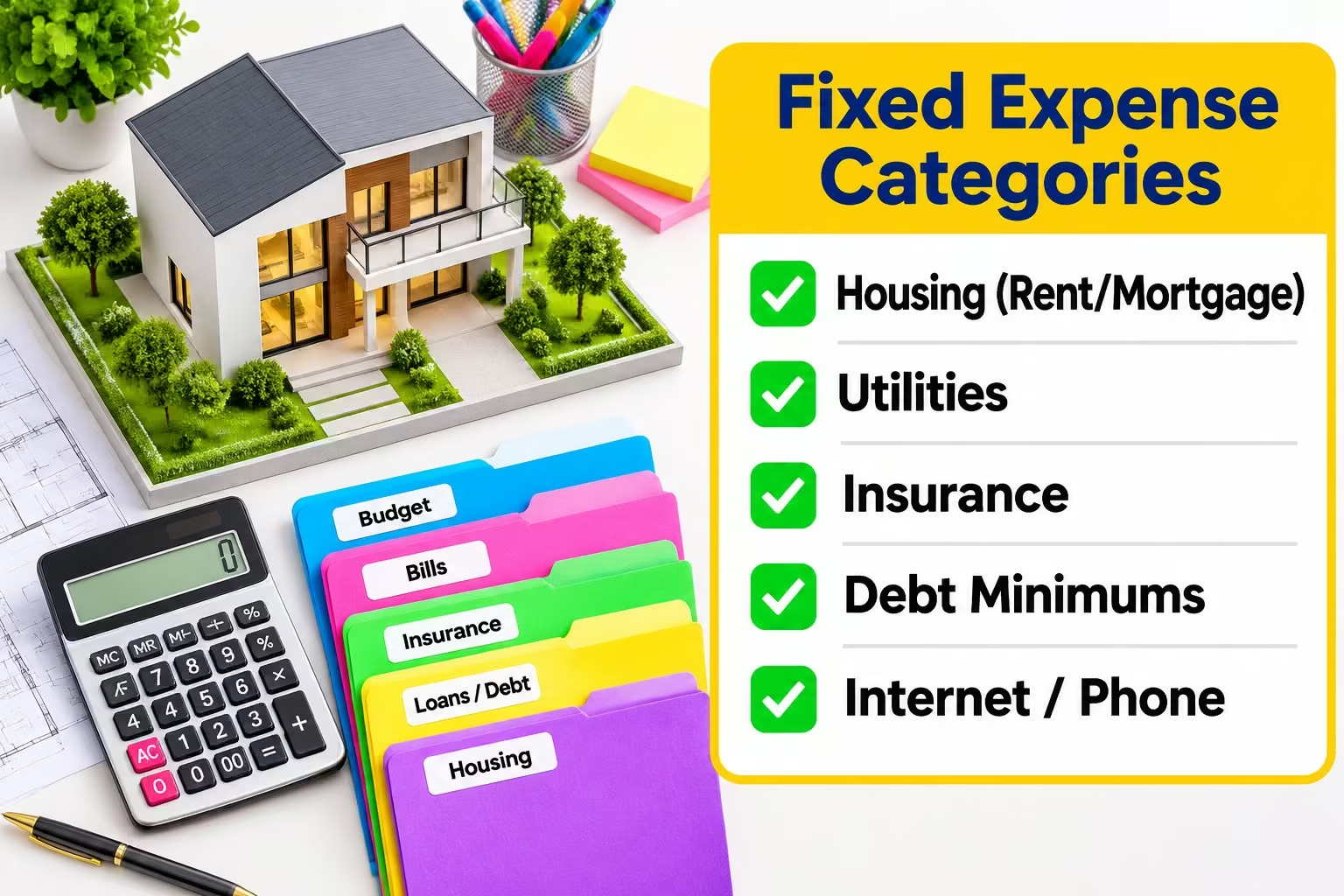
Fixed expenses are payments you can generally predict.
They might not always be identical, but you usually know when they’re coming and approximately how much they’ll cost.
1. Housing (Rent or Mortgage)
Housing is usually one of the largest expenses in a household budget.
Include:
- Monthly rent.
- Mortgage payments.
- Property taxes, if paid separately.
- Homeowners or renters association fees.
- Required building maintenance fees.
If you own a home, remember that your mortgage payment isn’t the only cost of homeownership.
Repairs, maintenance, and property-related expenses deserve attention too.
2. Utilities
Your utilities category covers the basic services that keep your home running.
Include:
- Electricity.
- Natural gas.
- Water.
- Sewer services.
- Trash collection.
Some utility bills change depending on the season.
Your electricity bill might increase during summer because of air conditioning, while heating costs can rise during winter.
I recommend looking at your previous bills and calculating a realistic monthly average.
3. Insurance
Insurance is easy to forget because you don’t always use it.
But the premiums still need to be paid.
Depending on your circumstances, this category might include:
- Health insurance.
- Auto insurance.
- Homeowners insurance.
- Renters insurance.
- Life insurance.
- Disability insurance.
If you pay certain premiums annually, you can use a sinking fund to save toward the next payment.
4. Debt Minimum Payments
This category covers the minimum payments required on your outstanding debts.
Examples include:
- Credit card minimum payments.
- Student loan payments.
- Personal loan payments.
- Auto loan payments.
- Other required debt payments.
Here’s something important.
Don’t confuse minimum payments with extra debt repayment.
Your required payments belong in this category. If you plan to pay an additional $150 toward a credit card, give that extra payment its own debt payoff allocation or include it in your broader debt repayment plan.
If you are using these categories to pay down credit card debt, use our free Debt Payoff Calculator to see how fast you can become debt-free.
5. Internet and Phone
These expenses are usually predictable, which makes them easy to budget for.
Include:
- Home internet.
- Mobile phone bills.
- Family phone plans.
- Essential communication services.
Take a few minutes to review your current subscriptions. Tip 11 in our 15 budgeting tips shows how a yearly bill review can add up.
Are you paying for a phone plan you barely use? Could you switch to a cheaper internet package?
Sometimes the easiest way to free up money is to review bills you’ve been paying automatically for years.
Group 2: Variable Budget Categories
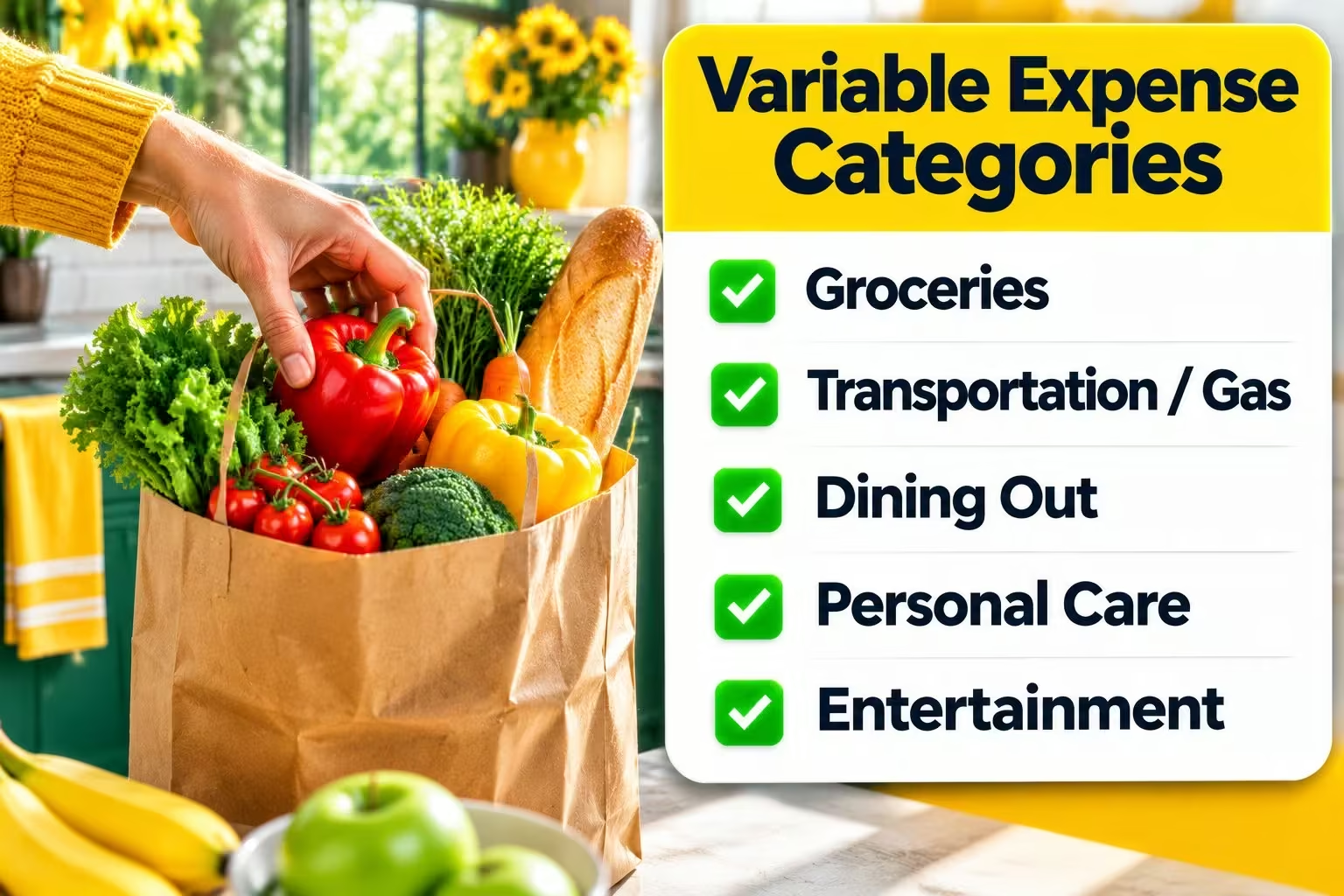
Variable expenses change from month to month.
This is where many people struggle.
You might spend $350 on groceries one month and $470 the next. Your transportation costs might increase because you have more errands or need to travel.
The trick is to give yourself realistic spending limits.
6. Groceries
This category covers the food and household essentials you buy for home.
Include:
- Fresh vegetables and fruits.
- Meat and dairy.
- Pantry items.
- Snacks.
- Cleaning supplies.
- Basic household necessities.
I recommend keeping groceries separate from restaurant spending.
Why?
Because spending $500 at the grocery store is very different from spending $500 on takeout and restaurant meals.
Separating the two helps you identify where your food money actually goes.
7. Transportation and Gas
Transportation costs can add up quickly, especially if you drive regularly.
Include:
- Gasoline.
- Public transportation.
- Parking.
- Tolls.
- Rideshare services.
- Regular transportation-related expenses.
If you own a vehicle, keep major repairs and annual registration costs in separate sinking funds.
That way, one expensive repair doesn’t completely disrupt your regular transportation budget.
8. Dining Out and Takeout
Let’s be honest. Most people aren’t going to cook every single meal at home.
And that’s okay.
Use this category for:
- Restaurants.
- Coffee shops.
- Takeout.
- Food delivery.
- Fast food.
- Occasional lunches at work.
The goal isn’t to eliminate these purchases.
It’s to understand how much they’re costing you.
If you spend $15 on lunch five times a week, that’s approximately $300 a month over four weeks.
Once you see the number, you can decide whether it fits your priorities.
9. Personal Care
Personal care is one of those budget categories that can quietly become expensive.
Include:
- Haircuts.
- Hair products.
- Skincare.
- Toiletries.
- Cosmetics.
- Basic grooming.
- Personal hygiene products.
You don’t need to feel guilty about spending money on yourself.
Just make sure the amount is realistic for your income.
10. Entertainment and Recreation
This category covers the things you do because you enjoy them.
Examples include:
- Movies.
- Streaming entertainment.
- Hobbies.
- Concerts.
- Games.
- Sports activities.
- Weekend outings.
- Social activities.
I strongly recommend keeping this category separate from essential expenses.
It makes your budget easier to understand and gives you a clear amount you can spend without constantly second-guessing yourself.
Group 3: Sinking Funds and Non-Monthly Expenses
This is where many budgets fall apart.
You plan for rent, groceries, utilities, and debt payments. Everything looks fine.
Then your car needs repairs. Your annual insurance bill arrives. Christmas comes around.
Suddenly, you’re reaching for your credit card.
These expenses aren’t necessarily emergencies. They’re often predictable expenses that simply don’t happen every month.
That’s why I recommend creating sinking funds.
11. Car Maintenance and Repairs
Cars need maintenance.
Even if your vehicle is running perfectly today, you know you’ll eventually need to pay for something.
Include:
- Oil changes.
- Tire replacement.
- Brake repairs.
- Battery replacement.
- Vehicle servicing.
- Unexpected mechanical repairs.
You can contribute a fixed amount each month and build up the balance over time.
For example, if you plan to save $600 for vehicle maintenance over the next year, you could set aside $50 each month.
12. Holiday Gifts and Special Occasions
Holidays and birthdays shouldn’t catch you completely off guard.
Create a separate category for:
- Christmas gifts.
- Birthday presents.
- Wedding gifts.
- Family celebrations.
- Holiday travel.
- Special occasions.
Think about what you typically spend throughout the year.
If you expect to spend $600 on holiday gifts, saving $50 a month gives you $600 by the end of 12 months.
No last-minute panic.
13. Medical and Dental Expenses
Healthcare costs can be unpredictable.
Even if you have insurance, you may still need to pay for:
- Prescription medications.
- Dental checkups.
- Eye examinations.
- Copayments.
- Deductibles.
- Medical appointments.
- Other out-of-pocket healthcare costs.
For predictable expenses, such as annual dental visits or planned medical appointments, a sinking fund can help.
For unexpected medical emergencies, consider maintaining an emergency savings reserve as well.
14. Annual Subscriptions and Memberships
This category is easy to overlook.
You might forget about a subscription until the annual payment suddenly appears on your bank statement.
Include:
- Annual software subscriptions.
- Professional memberships.
- Website hosting.
- Domain renewals.
- Online services.
- Gym memberships paid annually.
For example, if your annual subscriptions cost $240, saving $20 every month gives you enough to cover the next renewal.
Group 4: Savings and Financial Goals
15. Savings and Investments
I deliberately include savings and investments as budget categories because they deserve the same attention as your regular bills.
Don’t wait until the end of the month to see whether anything is left.
Decide how much you want to allocate toward your financial goals.
You can divide this category into smaller sections:
- Emergency fund.
- Short-term savings.
- Retirement contributions.
- Roth IRA contributions, if eligible.
- Traditional IRA contributions, if eligible.
- 401(k) contributions.
- Long-term investment goals.
- House down payment.
- Education savings.
You don’t have to fund every goal immediately.
Start with what fits your income and current financial situation.
If you’re still building your emergency savings, that might deserve priority over optional investment contributions. Make sure you also understand your employer’s retirement matching arrangements and any applicable account rules before making decisions.
The important thing is to stop treating savings as whatever happens to be left over.
Give it a place in your budget.
The Most Common Budgeting Mistake: Forgetting “Fun”
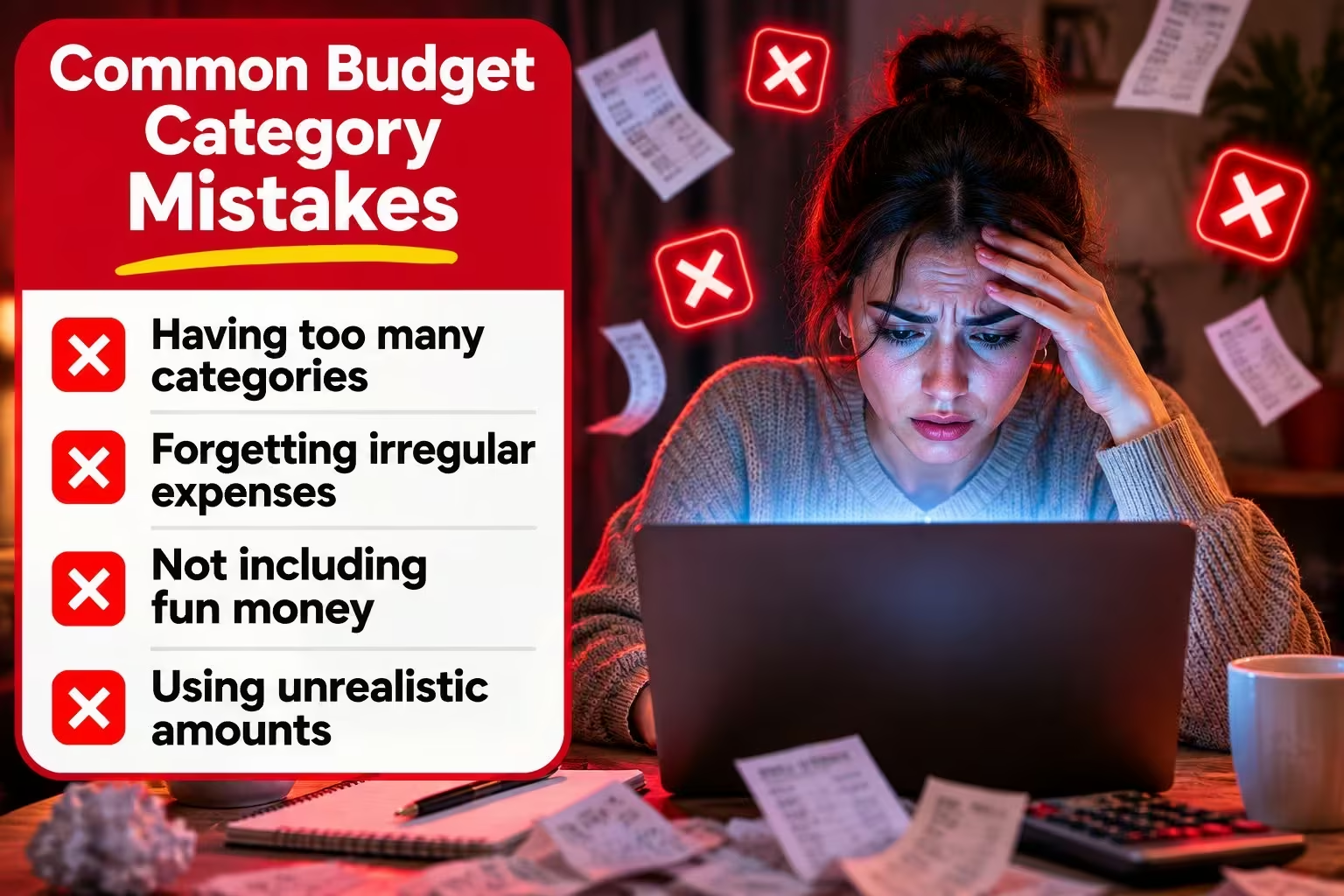
I want to spend a little extra time on this one.
I’ve seen plenty of budget templates that focus entirely on essentials.
Rent. Groceries. Insurance. Debt. Savings.
Everything looks responsible.
But where’s the money for enjoying life?
Here’s the problem.
If you create a budget that allows absolutely no room for entertainment, hobbies, or small personal purchases, you’re setting yourself up for frustration.
Eventually, you might get tired of saying no to everything.
Then you overspend, feel guilty, and decide that budgeting doesn’t work.
That’s not a budgeting problem. It’s a budgeting design problem.
Give yourself a guilt-free spending category

Let’s say you take home $3,500 a month.
After covering your essential bills, groceries, transportation, savings, and debt payments, you decide that you can comfortably allocate $50 to personal enjoyment.
That $50 is yours to use.
You could spend it on:
- A coffee with a friend.
- A movie.
- A small hobby purchase.
- A meal out.
- Something you’ve been wanting for a while.
Once it’s gone, it’s gone until your next budget period.
But while that money is available, you don’t need to feel guilty about spending it.
That’s the point.
Your budget should help you enjoy your money responsibly, not make you feel bad every time you spend it.
How to Customize Your Spending Categories for Budgeting

Here’s something I want you to remember:
No two household budgets need to look exactly alike.
A single person living in an apartment has different expenses from a family with three children.
A freelancer has different financial responsibilities from someone receiving a regular paycheck.
Your budget categories should reflect your actual life.
Let’s look at a few examples.
If you own a pet
You probably need a separate pet care category.
Include:
- Pet food.
- Veterinary visits.
- Vaccinations.
- Grooming.
- Pet insurance.
- Medication.
- Toys and supplies.
- Boarding or pet sitting.
Don’t bury these expenses inside groceries or miscellaneous spending.
Pets have ongoing costs, and those costs deserve their own place in your budget.
If you’re a freelancer or self-employed
Your budget needs to account for expenses that traditional employees might not have.
Consider creating categories for:
- Self-employment tax reserves.
- Business software.
- Website hosting.
- Marketing.
- Professional services.
- Business equipment.
- Health insurance.
- Retirement contributions.
- Income tax payments.
For US freelancers, tax obligations can vary based on income, business structure, deductions, and other circumstances. Consider setting aside money for taxes using guidance from a qualified tax professional rather than treating all business income as spendable money.
If you have children
Family budgets often need additional categories.
You might include:
- Childcare.
- School supplies.
- School activities.
- Clothing.
- Children’s healthcare.
- Sports and extracurricular activities.
- Education savings.
- Family outings.
Some expenses are predictable, while others change throughout the year.
Separate them when doing so makes your spending easier to understand.
If you’re paying off significant debt
You may want to create more detailed debt categories.
For example:
- Credit card minimum payments.
- Extra credit card payments.
- Student loan payments.
- Personal loan payments.
- Debt consolidation payments.
This helps you see how much money is going toward debt every month.
It also makes it easier to track progress.
How to discover the categories you actually need
Don’t just copy someone else’s budget template.
Start with your own spending.
Here’s what I recommend:
Step 1: Review your last two months of bank statements.
Download your checking account and credit card transactions.
Look at where your money actually went.
Step 2: Highlight recurring expenses.
Find rent, utilities, insurance, subscriptions, loan payments, and other regular obligations.
Step 3: Identify your variable spending.
Look for groceries, restaurants, shopping, transportation, entertainment, and personal care.
Step 4: Look for expenses that happen occasionally.
Find annual subscriptions, car repairs, holidays, medical bills, and other non-monthly costs.
Step 5: Create categories based on what you find.
Start with the 15 categories above and add or remove sections based on your situation.
You don’t need to create a category for every transaction.
You just need enough detail to make good financial decisions.
What About Irregular Expenses? (The Sinking Fund Strategy)
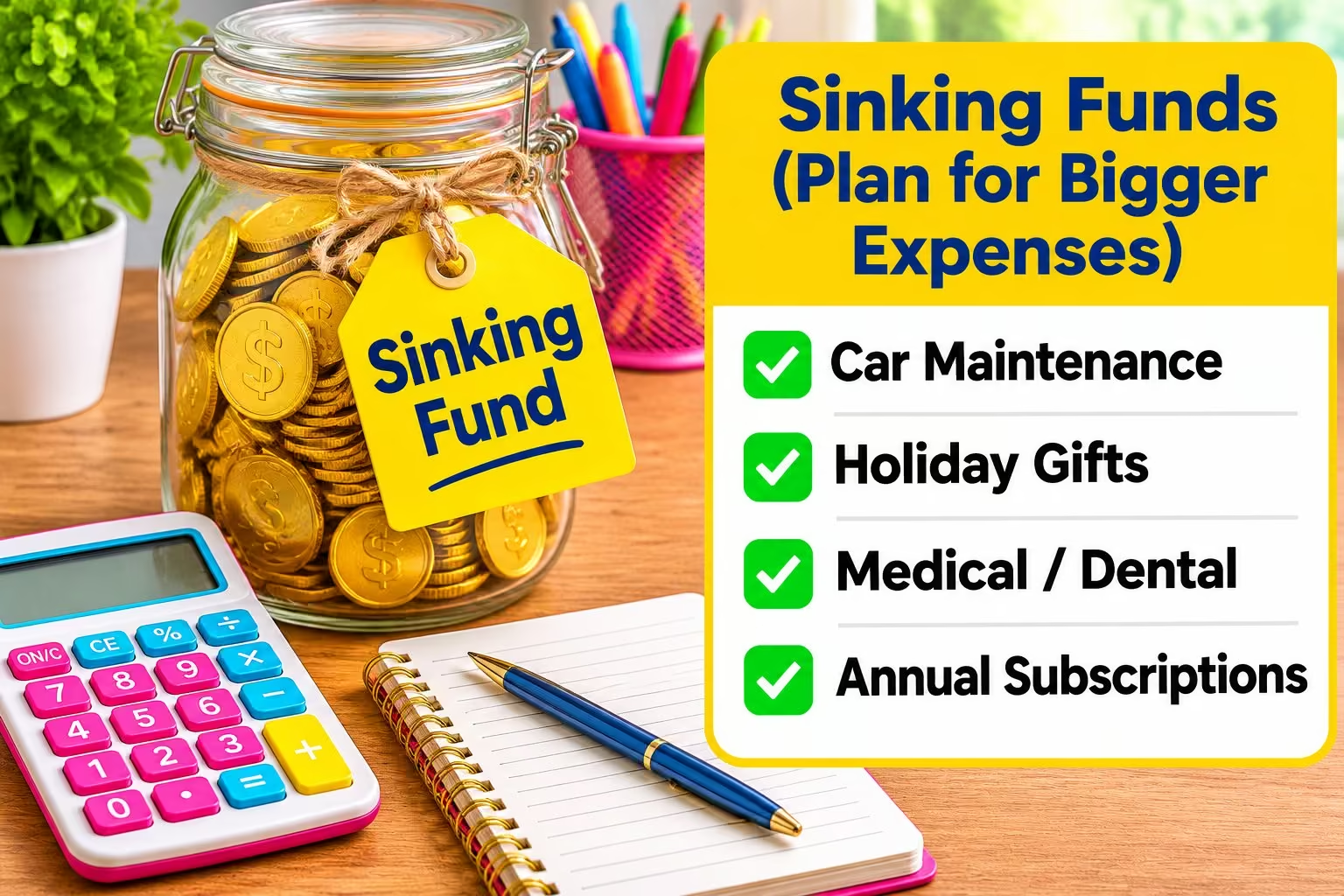
Let’s talk about something that catches people off guard.
Irregular expenses.
These are expenses that don’t arrive every month but are still part of your normal financial life.
Think about car insurance.
If your annual premium is $600, you might pay the entire amount once a year.
Without planning, that $600 payment can feel like a financial emergency.
But it isn’t unexpected.
You knew it was coming.
That’s where sinking funds help.
How sinking funds work
A sinking fund is simply money you save gradually for a planned future expense.
Instead of waiting until the bill arrives, you spread the cost across several months.
Here’s a simple example:
|
Expense |
Expected annual cost |
Monthly amount to save |
|
Car insurance |
$600 |
$50 |
|
Holiday gifts |
$480 |
$40 |
|
Annual subscriptions |
$240 |
$20 |
|
Vehicle maintenance |
$600 |
$50 |
|
Dental expenses |
$360 |
$30 |
|
Total |
$2,280 |
$190 |
By saving $190 every month, you gradually prepare for $2,280 in annual expenses.
The money is already there when you need it.
That’s a much better feeling than trying to find several hundred dollars at the last minute.
Where should you keep sinking funds?
You have a few options.
You could:
- Create separate savings accounts for major goals.
- Use savings buckets if your bank offers them.
- Track separate categories in a budgeting app.
- Maintain a sinking-fund spreadsheet.
You don’t necessarily need a different bank account for every category.
The important thing is knowing how much you’ve allocated and how much remains available.
Also, don’t confuse sinking funds with emergency savings.
A sinking fund prepares for a planned expense. An emergency fund protects you against genuinely unexpected financial problems.
Both have a place in a healthy budget.
How to Categorize Your Money Using Zero-Based Budgeting
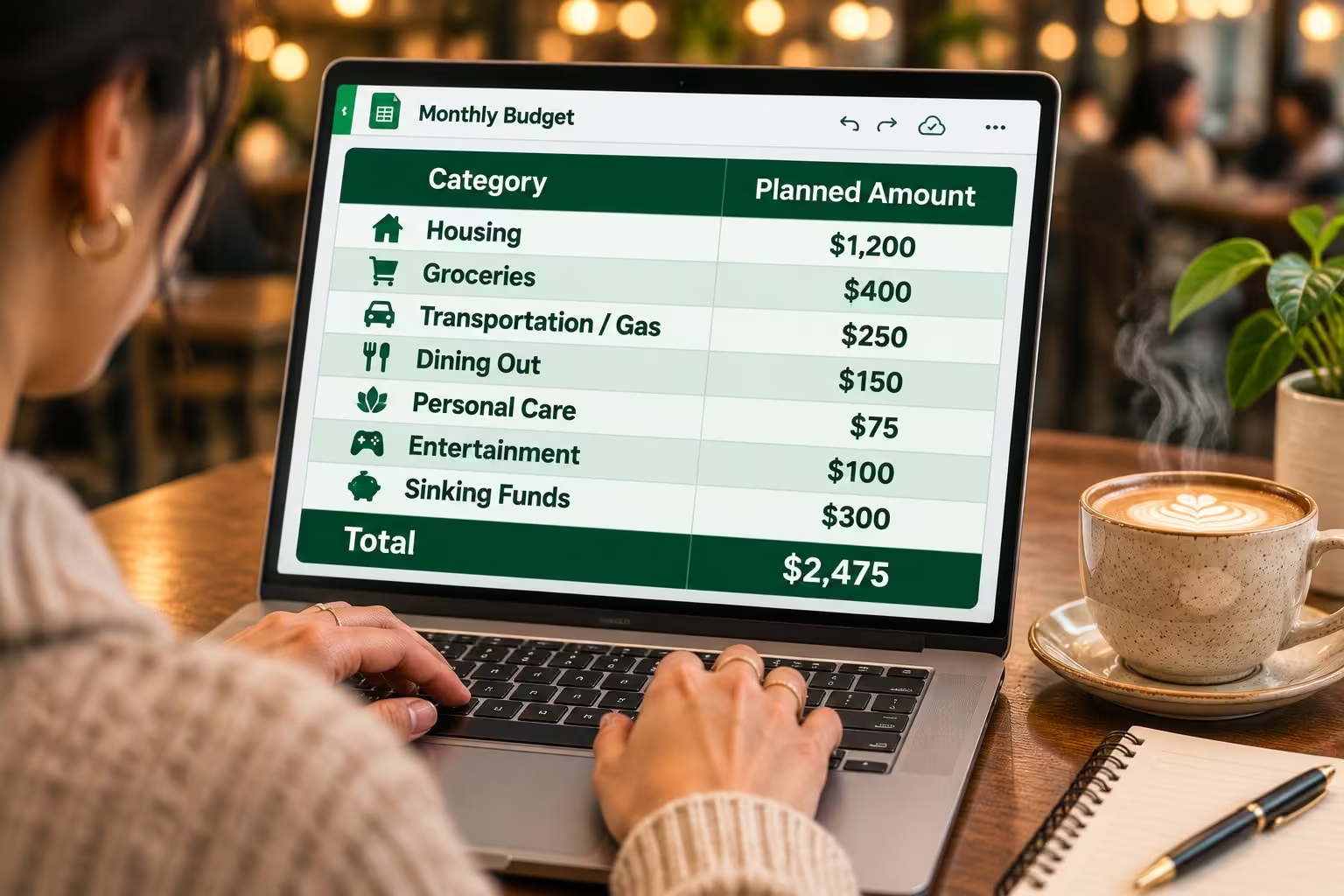
Now that you have your budget categories, what’s next?
You need to decide how much money belongs in each one.
This is where zero-based budgeting comes in.
Think of your budget categories as the folders and zero-based budgeting as the system that fills those folders.
You start with your actual available income.
Then you assign money to housing, groceries, utilities, insurance, savings, debt payments, entertainment, and every other category you need.
You continue until your planned income minus all your allocations equals zero.
For example, if your monthly take-home income is $3,500, your total planned expenses, savings, debt payments, and other allocations should add up to $3,500.
That doesn’t mean you spend every dollar.
It means every dollar has a purpose.
This approach is particularly useful if you’re trying to pay off debt, build savings, or get more control over your monthly spending.
To learn how to assign a job to every single dollar in these categories, check out our full guide on Zero-Based Budgeting.
In that guide, you’ll find a practical monthly budget example, instructions for creating your first zero-based budget, and a free template to help you get started.
A simple monthly category checklist
Before you finish your budget, make sure you’ve considered:
- ☐ Housing and utilities.
- ☐ Insurance and required debt payments.
- ☐ Internet and phone.
- ☐ Groceries and transportation.
- ☐ Dining out and entertainment.
- ☐ Personal care.
- ☐ Car maintenance and annual expenses.
- ☐ Medical and dental costs.
- ☐ Holiday gifts and subscriptions.
- ☐ Emergency savings.
- ☐ Retirement and investment goals.
- ☐ Additional debt payments.
- ☐ Miscellaneous spending.
You don’t need every category if it doesn’t apply to you.
Use what makes sense for your household.
Conclusion: Your Budget Categories Should Work for You
Here’s what I want you to take away from this guide.
You don’t need a complicated budget to manage your money better.
Start with 10–15 broad budget categories. Separate fixed expenses from variable spending. Create sinking funds for expenses that don’t happen every month. And don’t forget to give yourself some money for enjoying life.
Most importantly, don’t get stuck trying to create the perfect budget.
Your budget is a living document.
You can rename categories, combine them, delete unnecessary ones, and add new ones whenever your financial situation changes.
Maybe you get a new job. Maybe you move into a different apartment. Maybe you pay off a credit card or adopt a dog.
Your budget should change with you.
Start simple.
Review your actual spending. Build budget categories that reflect your life. Then give every dollar a job.
You don’t need to fix everything this month.
You just need to make a better plan than you had yesterday.
Consistency beats perfection. Every single time.

Syed Hamza Hasnain · Founder & Editor
Syed Hamza Hasnain is the Founder and Editor of MoneyPulsar. He researches and edits practical guides on budgeting, debt payoff, index investing, and retirement planning across our US and Pakistan tracks using primary regulatory sources. Learn more about our editorial process →